Showing posts with label Buddhism. Show all posts

Tuesday, 4 October 2016

Dreaming That The Buddha Was Not Fat


Dreaming That The Buddha Was Not Fat by Omar Cherif, One Lucky Soul

The essential reason why many moons ago I initially started writing an article about dreams is because I would get messages about things to come. Like repeatedly dreaming of losing my Cocker Spaniel Caramella months before finding out she was sick and had to be put down. Also Dreaming of the Accident Before it Happened is another one of those visions. Spooky, yes, but precognitive dreams are nothing new to humanity. By the time the piece developed to become an exposé then a “research paper”, I had learned how to better remember and record these fascinating subconscious adventures and insights. A year or so later some friends and I came to agree that the writings had become a book and the work on it was carried on.

The information is usually received during these semi-consciousness states right at the moment of waking up — known as Hypnopompic. But on rare occasions the transference may occur while drifting into sleep — known as Hypnagogic.

What was different about this particular hypnopompic dream is that it was simply a sentence or statement I awoke to one morning. It was the sound of an Orphic and somewhat familiar intuitive voice saying: “Buddha was not fat”. What? I knew there was something to the story and the curiosity led me to instantly look it up.

Indeed, the fat jolly Buddha is the not the Buddhism Buddha, but a different figure altogether.
A bit of research showed that there is a widespread confusion, especially in the West, about two different figures: Siddhartha Gautama — The Buddha — who lived 2,600 years ago in India on one side and the Laughing Buddha — Budai or Pu-Tai or Hotei — who lived 1500 years ago in China on the other. 


Writing about said dream herein, I was reminded by fun childhood memory from the summer of 1988 when this 10/11-year-old boy went with his maternal grandmother to visit his aunt in Los Angeles. After a few weeks there, we flew to Honolulu, Hawaii for five days. We were staying at the Sheraton Waikiki and, as I remember, all I wanted to do was to play Street-fighter arcade games.

Naturally, being tourists, and being with them older people, meant that we visited lots of shops and stores. This is where something began to repetitively happen. As my grandma, aunt, and uncle went about to check the merchandise, many of the Asian-looking sellers would come closer to me, hold one of my earlobes and start rubbing it gently as they smile and say “Ahhh, Good Luck. Good luck” with their distinctive English accent.


You know how you see a cute child and stroke their hair with your hand? Well in Hawaii, it was always my ears. 

As we all came to reckon, my full, meaty earlobe was indeed a sign of good luck as it was a reminder of the Buddha.

For the ancient Indians, I later learned, having large ears denoted that one is all-hearing and was attribute of a “Great Man”. 

The Chinese believe it to be a sign of vitality and independence; that such people have the courage to do whatever they want in life. That is why we find that in most statues, sculptures, and paintings the Buddha is depicted with peculiarly long, dangling earlobes. 

This however wasn’t the first time people notice or touch my earlobes, it was actually a known feature of mine within the family. In some later years, girls would jokingly tell me that if I were a girl, I would probably have many earrings.


On a much more hilarious note from the same Hawaii trip, here is a story about getting caught with nude playing cards by my aunt, which fittingly became part of the Early Memories Never Worded series.
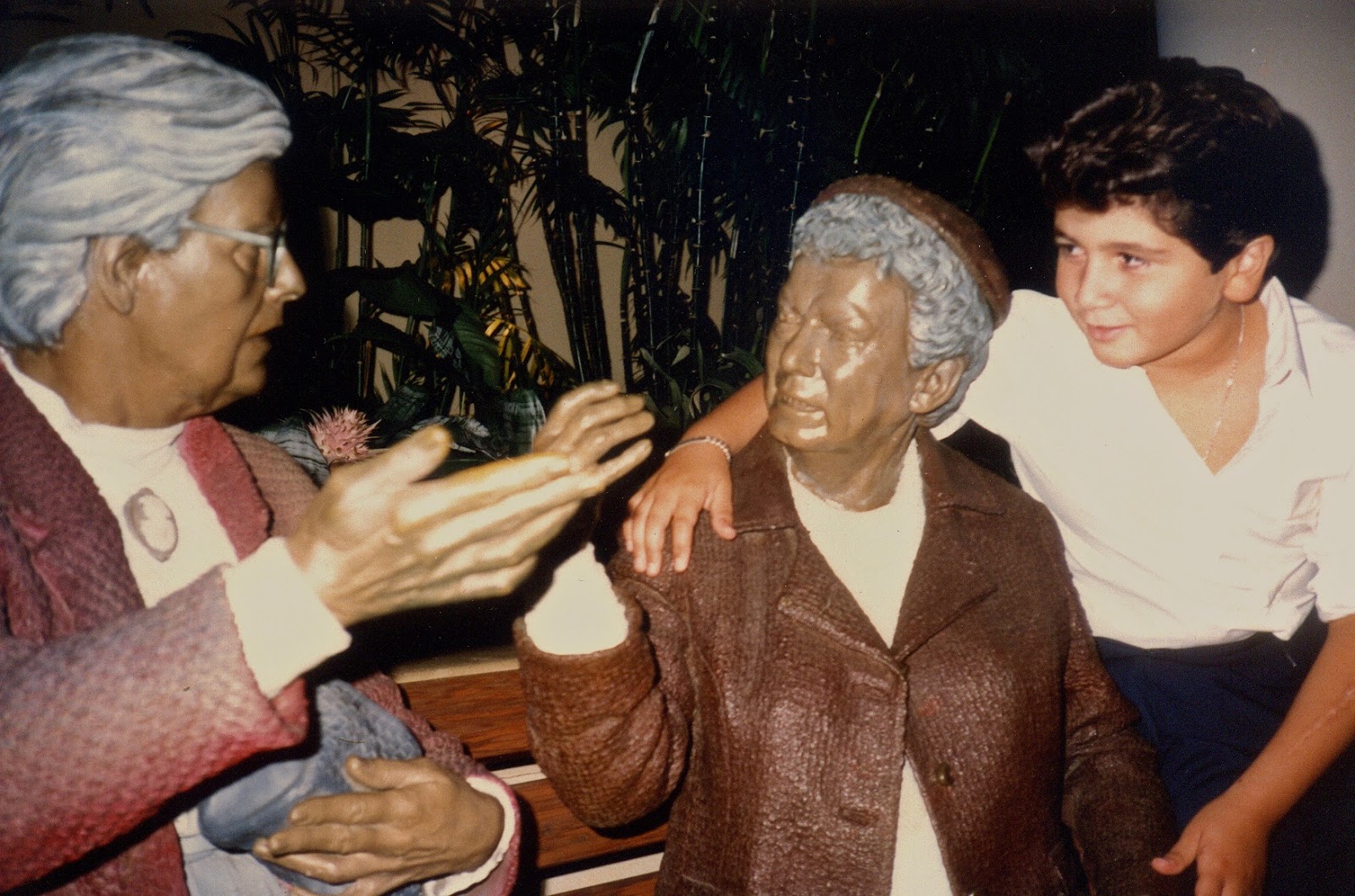


Dreaming That The Buddha Was Not Fat by Omar Cherif, One Lucky Soul
My earlobes and I having fun during that U.S trip in 1989. This was an L.A
wedding related to the friends of my aunt when I had to rent a tuxedo.


Historically speaking, the ‘Buddhism’ Buddha, Siddhartha Gautama, was born (likely in the fifth or sixth century BCE) a Hindu prince in Lumbini and raised in Kapilvastu — both located in today’s Nepal. The culture and tradition then and there was for men to display their wealth and prosperity on their ears. It is believed that he must have adorned large, heavy ear jewellery made of precious metals and stones, which may have resulted in stretching his ears.

After renouncing his royal hedonistic life The Buddha travelled throughout India, following yogis and gurus who taught asceticism. This included extreme exercise and self denial, which is how they quiet the urges of the body in order to master the mind into submission. He eventually surpassed all his teachers while starving himself for six years through deep meditations.

During that time he became almost like a skeleton, before renouncing extreme asceticism as well. He then sat down under a peepal (Bodhi) tree at Bodh Gaya and achieved Enlightenment. It is when he discovered the Buddhist Middle Way — a path of moderation away from the extremes of self-indulgence and self-mortification — which he began teaching. It is something more people ought to remember whenever feeling inclined to reach any extremism.  

As such, being fat doesn’t even make sense. The dangling ears are one thing but being overweight is a totally different thing that contradicts all what is known about the Buddha.


So who was fat?
Dreaming That The Buddha Was Not Fat by Omar Cherif, One Lucky Soul
Along with the statue shown in the featured photo (right), this is another
Laughing Buddha I grew up seeing everyday at home.
Thank you Mother for snapping those shots.

The chubby happy Buddha with the large belly, as well as the even bigger earlobes, known as the “Laughing (Oriental) Buddha” we often come across in various places around the world is different from Siddhartha Gautama. In China, this jolly figure is known as Pu-Tai or Budai; and in Japan as Hotei.


Nicknamed The Laughing Buddha, Budai is based on an eccentric Chinese Buddhist monk and Zen master who lived over a thousand years ago. He was a generous and jovial man who did not speak much. However, he remains exclusive to Chinese Buddhism in addition to Shinto culture. 

In Chinese folklore, Budai was later upgraded to a deity. And again, being fat represents wealth, prosperity, and good luck.

While “Buddha” means “The Awakened One” or “The Enlightened One”, “Budai” humbly translates into “Cloth Sack” — reference to the one he would wear, from which he pulled rice plants among other foods and also candy for children. 


Next time you’re in a Chinese restaurant and find a statue or an illustration of The Laughing Buddha, remember that he’s not The Buddha, the founder of the Buddhist philosophy. Don’t forget to touch his earlobes for good luck though. Or I can let you touch mine if you can show you have good intentions.

Lastly, here is a collage made up of four different sculptures I came across and photographed during my U.S tour
— originally made for a post titled Desiring Not To Desire Is Still Desire.
 While the top left was captured at the Art Institute of Chicago, the other three bronze ones at the Denver Art Museum.


Using my own photos for articles on here or even for Facebook posts turned out to be a highly convenient way to avoid copyright issues. I only came close twice in those past 15 years of publication and ever since decided to be mindful. They likewise seem to add more uniqueness and authenticity to the writings... or so both Buddhas would have concurred. 


Dreaming That The Buddha Was Not Fat by Omar Cherif, One Lucky Soul
*(Top L.) Buddha Seated in Meditation — Dhyanamudra India, Tamil Nadu,
Nagapattinam Chola period, c. 12th Century Granite
*(Top R.): Seated Buddha — Cambodia, Khmer Empire, 1000s
*(Bottom L.): Seated Buddha — Myanmar [Burma] 1876
*(Bottom R.): Seated Buddha — Thailand, Lanna kingdom 1400s


Related Posts Plugin for WordPress, Blogger...

Thursday, 31 March 2016

To Forgive Is Not To Reconcile


A few days ago I wrote on my Facebook wall, “Forgive others because you deserve to set yourself free.” I had already shared it before and kept it in my ‘Reflections’ Word file. Five months later, I thought of posting it again. Someone commented that they couldn’t understand the link, so I decided to dig deeper before replying to them. And what I found is worth reflecting upon.

Let us examine the difference between two often-confused terms: Forgiveness and Reconciliation.


In general, forgiveness is the act or process of pardoning to prevent harmful thoughts from causing damage to one’s mental well-being. It is an inner response. When anger, resentments, and grudges arise due to past abuse or a certain crime or accident, by forgiving the wrongdoer we get a chance to let go of these negative emotions. But how can one forgive those who have hurt them? And more importantly, why do it?

In Buddhism, when you forgive someone who has harmed you, you decide not to retaliate, not to seek revenge. You simply unburden yourself from the weight of grudges, resentment, and retribution. You get it out of the system by shifting how you think about it. You choose to do this for yourself, for your own healing and well-being.

Despite that it may help the other person as well, forgiveness primarily involves us and not them. Reconciliation sometimes follow forgiveness, though it’s possible to forgive without re-establishing or continuing the relationship. We don’t have to like the wrongdoer or even see them again. In fact, we can forgive someone who is dead, because without forgiveness they aren’t really dead in our minds, they remain somewhat alive and real.

So the letting go is essentially for our own peace of mind.

 Whether it’s an abusive parent, an unfaithful partner, a close friend who has backstabbed us, or just a random stranger, we can forgive the person without excusing the act itself. Forgiveness does not mean we justify or condone or minimise their harmful behaviour; it means we choose not be angry or resentful towards them.

Gandhi said, “An eye for an eye will only make the whole world blind.” He equally said, “Forgiveness is the virtue of the brave.”

Forgiveness is also the gift of the wise. We can do it on our own, without having the other party to know or understand why we have done it. The bitter taste of the memory may stay with us forever, but the act of letting go that comes with forgiveness allows us to better ‘deal’ with the memory of the offence. For true healing does not mean erasing the memory or denying the harm done; it’s simply finding a way to overcome the negative thoughts and emotions that are linked to it — thereby not letting them dictate and control our behaviour. It remains a heck of a powerful choice. By dropping the weight, one is capable of focusing on more positive aspects in their lives, get well, and move on.


There are several elements or steps which need to be achieved before true forgiveness is achieved and letting go is rendered possible. I have found that Buddhism and Psychotherapy offer more or less the same procedure to healing.

First, acknowledging to the self that wrong had been done to it.

The emotion needs to be felt and expressed. Fully experiencing the related thoughts and feelings allows one to be able to expunge them, giving a chance for more positive ones to occupy the mind, body, and overall psyche.

The next step is to understand the reason behind the wrongdoing, by reflecting upon it.

The human brain is almost conditioned to constantly try to look for explanations. At this point, even randomness would suffice to convince it.

Then comes reestablishing safety.

This is achieved so that the act doesn’t reoccur. Because forgiveness doesn’t mean putting oneself in a position to be harmed again. Neither does it mean to literally “forget”, since there would be no lesson learned if that were the case. At this level, you may decide to no longer see the person, end a relationship, or establish new boundaries. To be able to proceed, safety needs to be re-acquired to a certain reasonable extent.

Note that the above three steps do not have to follow this specific order. They can overlap and the forgiver may keep returning to them interchangeably until they are ready to move on with their grieving process.

Then finally comes letting go.

This stage seems the hardest because, in a way, it appear like you’re surrendering power. But you are not. Again, you are doing this solely for your self. You choose to set it free. It may actually take months or years to get rid of all the anger, hurt, and resentment. But then when it happens, one becomes liberated from the burden, because they had fully let go of the transgression — making peace with their past. That is essentially it.

The Significance of Letting Go is an article of mine covering this specific element. Another is Codependency: What Being Addicted to Someone Means

Interestingly, in some earlier Buddhist teachings the emphasis was not on forgiving; but on the foolishness of taking offence in the first place. They spoke of transcending the whole experience.

He abused me, he struck me, he overcame me, he robbed me — in those who do not harbour such thoughts hatred will cease.
— Dhammapada 1.3–4; trans. Radhakrishnan

As poetic and peaceful as it sounds, expecting someone who was repeatedly abused or raped not to “take {any] offence” may seem absurd at first glance, even a tad too otherworldly. While the ideal message or concept behind the sentiment remains pure, noble, perhaps also enlightened, it is certainly challenging to adopt such view when dealing with certain traumas.    

Now, while we are herein mainly discussing forgiving others [or being forgiven by them], other times to be able to carry on living we must learn to forgive ourselves — for not knowing that which we didn’t know at a certain point in time. This forgiveness then tends to breed empathy, compassion, and eventually self-love.


On the other hand, we have reconciliation. It means a return to amicability; restoring the harmony of a certain connection you had with another person. It is a more complex tête-à-tête process that surpasses forgiveness, which is a solo job. Reconciliation requires reestablishing trust between both parties by them agreeing to work together in a somewhat friendly manner.

If the responsibility for the wrongdoing is denied, or the offender maintains that they did no wrong, there’s no chance for reconciliation. 

Similarly, if the offender insists that the feelings of the other person are not of importance, or that they have no right to hold them to their standards of right and wrong, the person won’t trust the offender not to hurt them again.

For trust to be regained and reconciliation achieved, there must be mutual respect and agreement on what is acceptable behaviour and what is not. 

The offender has to admit as well as communicate they have hurt the other, that it was wrong to do so. They have to promise to exercise control in the future. Only then can their relationship be re-established.

Like forgiveness, reconciliation offers liberation and healing. But unlike forgiveness, because it involves two parties, its steps are more challenging. That is why it’s usually more complicated to materialise.


Just like there are steps to forgiveness, a healthy reconciliation requires the following:

First, the wrongdoing has to be acknowledged. Hence, its occurrence accepted.

Second, to understand why it had happened.

If the two parties try to patch things up without getting to the root of the issue, nothing can really heal. Only when the root intentions have been shown to both to be reconcilable and the differences resolved can the healing process begins to take place.

Finally, the offender needs to promise to restrain himself from repeating the wrongdoing in the future. This is when trust gets a chance to be restored, and the deal is closed to some degree. Along with honesty, respect, and a flowing two-way communication, trust is after all the foundation of every healthy relationship; make sure not to shake it too many times.


As we have seen, forgiveness and reconciliation are not the same. Forgiveness is about letting go of the past, while reconciliation is about committing to a future. Reconciliation may or may not be possible due to many sorts of obstacles. And when it isn’t possible, forgiveness comes in handy, because you can do it on your own and for your own — to let go of YOUR burdens.

Both forgiveness and reconciliation could be long processes. They each offer healing and a chance to rebuild oneself or fix a relationship. Reconciliation is normally more complicated. It may sometimes never occur, or perhaps in some cases even shouldn’t occur. Still, forgiveness is only one personal decision away that is worth our emotional and mental health. For it is one key to freedom.


Forgive, no need to forget. Or in the words of psychiatrist and scholar Thomas Szasz: The stupid neither forgive nor forget; the naive forgive and forget; the wise forgive but do not forget.”


Forgive. Because you deserve to set yourself free
It is not always about forgiving or being forgiven by others, you see
Sometimes we need to forgive ourselves. Follow me?
With forgiveness comes loves. And love entails compassion, understanding, and empathy
Makes you feel one with the bumblebee, the tree, the sea — the universe in its entirety
This openness also brings upon some needed vulnerability
’Tis destiny, my friend, quel poetry
A B C
123
Do Re Me
Let it be, Love. Now set it free.

Related Posts Plugin for WordPress, Blogger...