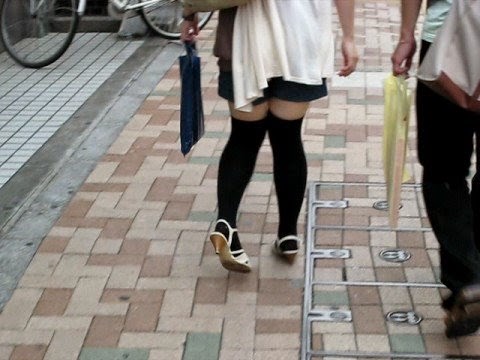
Bowlegs is a condition in which the knees stay wide apart when a person stands with their feet and ankles together. Certain cases are more extreme than others, normally forcing the person to walk in a somewhat strange way.
Medically speaking, Bow-leggedness is called Genu Varum. Also known as Bandiness, Bandy-leg, and Tibia Vara, it is a physical deformity marked by outward bowing of the lower leg in relation to the thigh, giving the appearance of an archer’s bow. Usually a medial angulation of both femur — the thigh bone — and the tibia — the larger of the two leg bones located below the knee cap — is involved.
Due to the folded position in their mother’s womb, being mildly bowlegged is considered normal in infants below 18-months old. As the child starts to walk and the legs begin to bear weight, the legs are typically straightened, resolving the issue without any type of bracing or treatment.
However, the condition may persist if the child is in poor health; mainly if sick with rickets (bone disorder caused by vitamin D deficiency) or suffering from any ailment which prevents the due ossification of the bones, or is improperly fed. Once older than three and a half years old and the legs and still notably crooked, then treatment is advised.
But why Japan? Well, bow-leggedness is particularly widespread in Japan where it is believed that a staggering 90% of women are bowlegged. According to a Japanese folklorist, Kunio Yanagida, in Japanese culture the crooked legs were once “known as beautiful woman’s attraction”, seen as cute and endearing. A similar idea lies behind China’s foot binding — a cultural symbol of femininity.
On a parallel yet more sensual note, check Why Some Women Point Their Feet When Aroused on this other article.
 |
| Is it still considered attractive? |
It is believed that the origin of bow-leggedness may have stemmed from the days of wearing kimonos. Since it’s easier to walk in them if you turn the toes slightly inward. “That also produces what has long been considered a graceful,
attractive gait.”
According to other popular theories, bowlegs could result from how girls sit on the floor as children; either with both legs bent outwards at the knees (called Onnanoko-zuwari in Japanese) or seiza, which is sitting on the heels with bent knees. Though for now, these ideas remain but theories.
According to other popular theories, bowlegs could result from how girls sit on the floor as children; either with both legs bent outwards at the knees (called Onnanoko-zuwari in Japanese) or seiza, which is sitting on the heels with bent knees. Though for now, these ideas remain but theories.
The condition is equally common in some other Asian countries, but perhaps not as widespread as in Japan. This confirms how frequently I have seen this phenomenon, mainly in the streets and subways of Canada and the U.S.
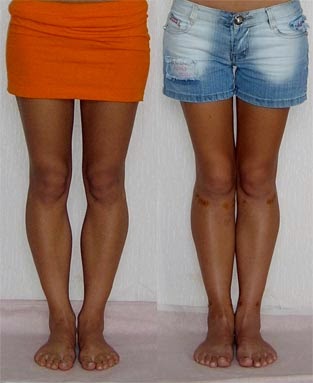
The legs of the young woman you see in the above video are referred to as “X legs”. It is when the knees are naturally inverted, causing the person to walk like a duck. One Japanese blogger shared: “They look like they need to pee”. Badly, it seems. Or they are about to take a group photos with their besties. However, the much more common in Asians, as well as in general, are the “O legs,” which are also arched but not as drastically.
 |
| Correction of leg curvature |
Fortunately, bowlegs can be treated in children and in adults. Anthropometric cosmetology is the medical practice science of correction and modification of deformities in the upper and lower extremities of the body. It is used to fix the X-shaped curvature of the legs as well as the O-shaped curvature. It can also be used in cases of relative shortening of the legs relative to body length.
Anthropometric cosmetology is done either to attain an aesthetically pleasing appearance or to eliminate physical and psychological discomforts. Though the severe cases of bow-leggedness can worsen quickly if not treated early enough. Treatment for children is typically braces, but also surgery may be necessary, especially for teens. The operation consists of taking a piece of tibia out, breaking the fibula, and straightening out the bone. There is also the option of slightly elongating the legs.
There are apparently other less professional ways to fix the ‘X’ and the ‘O’ shapes in legs. One of those natural treatments are the Japanese Ashi-yubi “Shiikuretto Ringu” (Toe secret ring) seen in the image below. Wearing this ring is supposed to help center the weight of the body. Because if you have bowlegs or your pelvis is distorted, your balance is spread outside. So the rings not only fixes the posture and straighten the legs, but allegedly it can also make one lose weight.
 |
| Ashi-yubi “Shiikuretto Ringu” (Toe secret ring) |
Another advertised treatment for O legs / X legs is a straightening correction band sold online for $22.
Even though treatments for bowlegs are available, many people choose not to do it because they could be costly. However, in extreme cases like in the featured video, walking this way for years damages the pelvis bone among other things. Due to uneven stress and wear on the knees, it usually leads to more complications, such as accelerated onset of arthritis. As a matter of fact, those with bowlegs and a genetic predisposition for developing arthritis will likely start having arthritic symptoms around the age of 30.
One related condition to bowleggedness is Genu valgum, commonly called “Knock-Knees”. And it is when the knees angle in and touch one another when the legs are straightened. It is the opposite of bow-leggedness, one could say. Beginning around two years of age it is common to see children’s legs become knock-kneed.
Both bowed legs and knock-knees are a part of normal development. As the child grows, the legs gradually straighten. Usually by 10 years of age, the legs are straight.

I actually think the girl in the same video may be bowlegged AND pigeon-toed. That’s like having dyslexia and being crossed-eyed. Sorry, just couldn't help it.
Oh well, now you know a few things about legs... and Japanese schoolgirls.
ALSO VIEW:
The Comfort Women of the Imperial Japanese Army
Why Some Women Point Their Feet When Aroused
What’s the Story with Blue Balls (and Blue Vulva)?
Arugula: The Healthy Ancient Aphrodisiac
Kicking That Sweet Habit: Why and How to Drop Sugar
When Selective Men Reject Women
The Intertwining of Music and Sexuality ― A Djembefola’s Tale
Why Hippies Are Sometimes Called Bohemians
Why the “No-Smoking” Sign is Still Used by Airline Companies
Why Americans Don’t Travel Much
Why NOT a Bidet?
Why Many Place Names End with ‘-Stan’
Why Flamingos Are Pinkish-Orange
Why Thanksgiving Dinner Is Served So Early
Kicking That Sweet Habit: Why and How to Drop Sugar
How I Dropped Two Waist Sizes in a Few Months
Why Some Women Point Their Feet When Aroused
What’s the Story with Blue Balls (and Blue Vulva)?
Arugula: The Healthy Ancient Aphrodisiac
Kicking That Sweet Habit: Why and How to Drop Sugar
Why Japanese Females Have Bowlegs
What’s the Story with Blue Balls (and Blue Vulva)?
Arugula: The Healthy Ancient Aphrodisiac
What’s the Story with Blue Balls (and Blue Vulva)?
Arugula: The Healthy Ancient Aphrodisiac
When Selective Men Reject Women
The Intertwining of Music and Sexuality ― A Djembefola’s Tale
Why Hippies Are Sometimes Called Bohemians
Why the “No-Smoking” Sign is Still Used by Airline Companies
Why Americans Don’t Travel Much
Why NOT a Bidet?
Why Many Place Names End with ‘-Stan’
Why Flamingos Are Pinkish-Orange
Why Thanksgiving Dinner Is Served So Early
Kicking That Sweet Habit: Why and How to Drop Sugar
How I Dropped Two Waist Sizes in a Few Months

